- Email:info@tsv-valve.com


 Jun 12,2026
Steam systems are brutal on isolation valves. High temperature, high pressure, and the constant assault of thermal cycles and condensate hammer will destroy a poorly chosen valve in months. You‘ve seen the aftermath: leaking seats that won’t seal, stems that lock up after a temperature swing, bodies that crack along weld lines. Standard soft-seated butterfly valves fail quickly — elastomers harden and crack above 200°C. Gate valves work but are heavy, expensive, and slow to operate.
The triple offset butterfly valve solves these problems. Its metal-to-metal sealing surfaces, combined with a unique eccentric geometry that eliminates friction during rotation, make it the preferred choice for demanding steam isolation. But not every triple offset valve is the same. Selecting the right one for your steam service requires understanding five critical parameters: pressure-temperature rating, sealing surface metallurgy, thermal cycling behavior, flow characteristics, and proper commissioning. This guide walks you through each one.
Start here. Your steam system operates at a specific pressure and temperature. The valve you choose must have a pressure-temperature (P-T) rating that equals or exceeds your maximum operating conditions across the entire temperature range.
The governing standard is ASME B16.34, which defines allowable working pressures for valve materials at temperatures from cryogenic to over 500°C. Class 150 valves are typically suitable for saturated steam up to 180–200°C. Class 300 extends to around 260°C for carbon steel bodies. Class 600 can handle saturated steam up to 340–360°C, and higher with alloy materials.
For carbon steel ASTM A216 Grade WCB — the most common body material for steam service — ASME B16.34 permits a maximum temperature of 425°C. Beyond that, you need chromium-molybdenum alloys: WC6 (1.25% Cr-0.5% Mo) reaches 550°C, and WC9 (2.25% Cr) reaches 593°C. These are your go-to materials for superheated steam applications where temperatures regularly exceed 400°C.
The TSV product range is engineered to comply with ASME B16.34 standards, with pressure classes including 150, 300, 600, and higher on request. The operating temperature range spans from -196°C up to 600°C depending on material selection, covering essentially any steam application from cryogenic to superheated.
How to read a P-T table correctly. When you look up the P-T rating for your chosen material and class, note that the allowable pressure decreases as temperature rises. A Class 300 WCB valve might be rated for 50 bar at 50°C but only 35 bar at 400°C. Always size based on the highest temperature your steam reaches, not just the design pressure at ambient. Overlooking this detail is a common cause of valve failure.
Below is a simplified reference for common steam service conditions and recommended TSV material grades:
| Steam Type | Typical Temp Range | Recommended Body Material | ASME Class |
|---|---|---|---|
| Saturated steam (low pressure) | 120–180°C | WCB | 150 |
| Saturated steam (medium pressure) | 180–260°C | WCB | 300 |
| Saturated steam (high pressure) | 260–340°C | WCB | 600 |
| Superheated steam | 340–425°C | WCB or WC6 | 600–900 |
| High-temperature superheated | 425–550°C | WC6 | 900–1500 |
| Extreme high-temperature | 550–600°C | WC9 (or stainless) | Custom |
Saturated steam is relatively forgiving — the carbon steel WCB body handles it well within its temperature limits. Superheated steam is another story. The lack of water content means no evaporative cooling effect; the valve body runs at nearly the same temperature as the steam itself. Chromium-molybdenum alloys (WC6, WC9) resist creep and oxidation at these higher temperatures. For applications exceeding 600°C, austenitic stainless steels like CF8M or high-nickel alloys may be required.
The sealing system is the heart of any isolation valve. In steam service, soft seats don’t last. Even high-performance elastomers (Viton, EPDM) degrade above 200–250°C. PTFE holds on longer but cold-flows under pressure and high temperature. Only metal-to-metal seals provide the durability required for high-temperature steam isolation.
Surface hardness is the key metric. The sealing surfaces of a triple offset butterfly valve for steam should be hardened to resist erosion from high-velocity steam particles and condensate droplets. For alloy steel seats, a surface hardness of at least 36 HRC is the industry baseline for steam service. Better yet, Stellite (tungsten-chromium-cobalt alloy) overlay on both the disc and the seat ring achieves hardness in the range of HRC 45–60 while maintaining galling resistance. Some TSV configurations utilize HVOF thermal spray technology to achieve protective layer thicknesses of up to 350 microns—significantly exceeding typical industry specifications.
Leakage rate expectations. A properly designed metal-seated triple offset butterfly valve can achieve leakage rates of Class IV (0.01% of rated capacity) or Class V (bubble-tight under specific test conditions) per ANSI/FCI 70-2. Some TSV models undergo bubble-tight seal verification at 1.1 times design pressure. For critical isolation where zero visible leakage is required, look for valves that have passed API 598 or ISO 5208 test protocols.
Conventional butterfly valves drag the disc against the seat through the entire rotation arc. With metal seats, this scraping causes galling—a form of abrasive wear where metal transfers from one surface to the other. After a few cycles, the seat is damaged and the valve leaks.
Triple offset geometry solves this problem. The disc contacts the seat only in the final 1–2 degrees of closure, with no rubbing or galling throughout the rest of the travel. This not only preserves the sealing surfaces but also significantly reduces operating torque, allowing smaller, lower-cost actuators.
Steam systems are not steady-state. You start cold, warm up, operate at temperature, then cool down for maintenance. This thermal cycling expands and contracts every component in the valve. Poorly designed valves seize or leak after a few cycles.
The galling trap. When two metal surfaces are forced together at high temperature and then cooled, they can gall—essentially welding together at microscopic contact points. When you try to open the valve, the actuator stalls or the stem shears.
Triple offset geometry prevents this by eliminating contact between the disc and seat during rotation. Even if the components expand at different rates—the body grows outward, the disc grows radially—the disc moves freely because it only contacts the seat at the exact closed position. This design also incorporates helical gear mechanisms or self-locking gear trains that maintain torque-seating without jamming.
Watch for material differentials. If your valve body is carbon steel (WCB) and your disc is stainless steel (CF8M), the thermal expansion coefficients differ. The disc expands more than the body. Triple offset designs accommodate this differential by ensuring that the two components only meet at the designed sealing interference—never throughout the rotation stroke.
Before commissioning a new steam valve, perform several manual open-close cycles at ambient temperature to verify smooth operation. During initial steam startup, warm up the line slowly (0.5–1°C per minute is a common rule) and open the valve gradually. After reaching operating temperature, torque the flange bolts again—thermal expansion often loosens bolted joints.
-1720.jpg)
Triple offset butterfly valves are used not only for isolation but increasingly for throttling control in steam systems. Their flow characteristics are approximately linear: flow rate changes proportionally to disc rotation angle, which makes them predictable to control.
Cv value comparison vs. gate valves. The flow coefficient (Cv) of a triple offset butterfly valve is approximately 2–3 times higher than a gate valve of the same nominal size. Why does this matter? You can often use one size smaller butterfly valve than a gate valve and still achieve the required flow capacity, reducing cost and weight dramatically. For large diameters (24 inches and above), a butterfly valve weighs roughly one-tenth of a comparable gate valve and costs 60-75% less.
Even when fully open, the disc and stem still occupy part of the flow cross-section, giving a flow resistance coefficient typically between 0.2 and 0.5 for DN200 sizes. That‘s acceptable for most steam isolation duties. For applications requiring minimal pressure drop, specify a full-bore design or oversize the valve by one class.
.jpg)
Q: Can a triple offset butterfly valve be used for superheated steam?
A: Yes, and it’s one of the best applications. The metal seat and friction-free rotation make triple offset valves ideal for superheated steam service. However, you must specify the correct material grade: WCB is suitable up to 425°C; above that, specify WC6 or WC9 body material. Standard triple offset valves can handle temperatures up to 450–550°C, with special designs reaching 600°C or higher for superheated steam.
Q: What is the maximum temperature for a standard triple offset butterfly valve?
A: For a standard metal-seated triple offset valve with Stellite overlay, the maximum continuous operating temperature is typically 400–450°C, depending on the body material. Some designs reach up to 550°C. Higher temperatures are possible with specialized materials like CF8M stainless or Inconel alloys. Always consult the manufacturer’s certified P-T table for the exact combination of material, class, and operating conditions.
Q: How do I prevent water hammer damage in steam lines?
A: Water hammer is one of the most destructive forces in steam systems. It occurs when condensate collects in the line and is accelerated by high-velocity steam, slamming into closed valves or fittings with explosive force. Prevention steps: install adequate steam traps (float-and-thermostatic traps are preferred) upstream of isolation valves to remove condensate before it accumulates. Open isolation valves slowly during warm-up to allow condensate to pass without generating high velocities. Before commissioning, drain all condensate from the line segment. Avoid rapid valve closure when the line is at full temperature and flow.
Even the best valve fails if installed or commissioned incorrectly. Follow these guidelines for steam service.
Flow direction. Most triple offset butterfly valves have a preferred flow direction, typically with the higher pressure acting on the disc to push it against the seat. Check the arrow on the valve body and install accordingly. Some bi-directional designs exist; confirm with the manufacturer.
Protect sealing surfaces from weld splatter. If you‘re welding the valve into the line, remove the disc and seat assembly first. Weld splatter on a Stellite sealing surface ruins the valve permanently.
Warm up before full pressurization. Steam valves should never be slammed open when the line is cold. Open the bypass valve or crack the main valve slightly, allowing steam to flow at low velocity. This “warm-up” period—typically 15–30 minutes depending on line length—raises the valve body temperature gradually and allows condensate to drain through the steam trap. Some TSV designs include heating jackets to maintain a consistent high temperature, especially effective for processes where media tends to solidify or crystallize at lower temperatures.
Retorque flange bolts after first heat cycle. After the system reaches operating temperature, shut down (if possible) and retorque all flange bolts. Thermal expansion relaxes bolted joints; loose bolts create leaks.
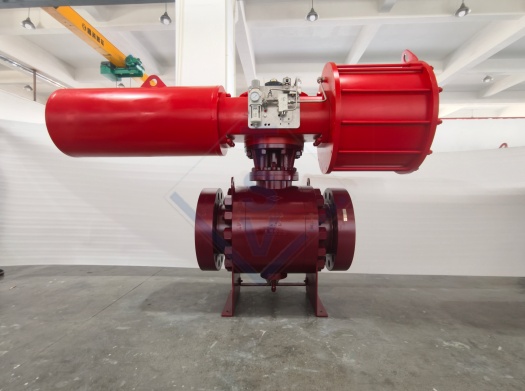
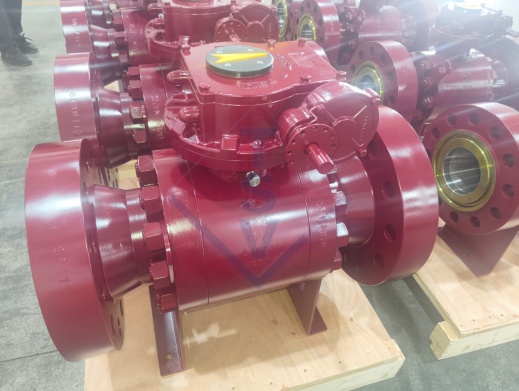
The TSV triple offset butterfly valve is built specifically for demanding applications like steam isolation. The three-eccentric hard-sealed design utilizes a three-eccentric structure where the valve seat and disc sealing surfaces are made of stainless steel with different hardness, providing good corrosion resistance, wear resistance, and extended service life.
Raw materials for TSV valves undergo rigorous quality checks including impact tests at -60°C and X-ray analysis, ensuring dependable operation even under extreme thermal cycling. Each finished valve is subjected to performance validation under customized parameters, including full compliance testing per API standards with shell tests at 1.5 times design pressure.
Sealing options are selectable—from metal-to-metal variants to hard-faced seals—allowing performance-matched selection according to specific steam parameters. For high-temperature steam where erosion resistance is critical, TSV employs advanced coating technologies including HVOF thermal spraying, achieving protective layer thicknesses reaching 350 microns. Special coatings and HVOF sprays deliver erosion resistance suitable for the most severe service applications.
Before you place your next steam valve order, collect three numbers: your maximum steam temperature (°C), your maximum operating pressure (bar or psi), and the pipe diameter. With those three inputs, a properly specified triple offset butterfly valve will outlast any soft-seated alternative and run maintenance-free for decades.
Need a custom valve selection sheet for your steam parameters? Contact TSV for a detailed proposal and sizing consultation. Share your steam temperature, pressure, line size, and desired leakage class. Their engineering team will recommend the optimal body material, seat overlay, and actuator configuration for your specific service conditions.
Related News



E-mail: info@tsv-valve.com

Telephone: +86-13695850057

Whatsapp: +86-13695850057

Address: TianSheng Industrial Park,Dong'ou Industrial Zone,Oubei Town,Wenzhou City,Zhejiang Province,China